What the tier actually rewards
Read the tier's name literally: one in a krillion means the crowd didn't join you. It does not mean the strangest word you know. Look at the flavor of recorded 100-point answers on the rare answers record: a named banana cultivar, a part of a flower nobody names, a TV brand dead since the fifties. Every one is a real, verifiable thing — just not the first thing that comes to mind.
Step 1: read the pool before you think
Every prompt publishes its official pool size, and the size is the strategy. A pool of 14,000 accepts almost anything — rarity there means finding an odd corner of a huge category. A pool of 18 means the valid answers are few and famous-to-experts: name any of them and you're already deep. The daily hints page puts each prompt's size and its historical percentile next to the prompt — read it before the clock starts, and decide where your one gamble goes.
The mechanics of pool sizes — what wide and narrow actually do to your score — have their own short guide: pool sizes explained.
Step 2: mine the obscure-but-real layer
Every category has three layers. The surface (Apple, Nike, Spain) pays Plankton forever. The invented layer (jokes, brand mashups) gets rejected — it was never in the pool. The paydirt is the third layer: real things one step past famous.
- Fruits: named cultivars — a specific banana or apple variety, not “banana.”
- Brands: the defunct and the regional — television makers of the 1950s, not today's bestseller.
- Geography: the small qualifying answer, not the capital — especially on prompts with letter or sound constraints.
- Anything technical: the term specialists use (plant anatomy, music theory) is usually in the pool and almost never typed.
The test for a candidate: would a category expert say “yes, obviously that counts”? If yes, and your friends wouldn't think of it — type it.
Step 3: pre-load with letter clues
Between dives, the hints page gives you each prompt's 100-point word first letter and length — never the word. That's not a spoiler; it's a training wheel. “Starts with H, ten letters, part of a plant” teaches your brain the shape of paydirt answers. Do that for a week and you'll start generating candidates in the right layer unprompted.
A category cheat sheet
The obscure-but-real layer, by category — the fastest way to retrain your first instinct:
| Category | The crowd's answer | The paydirt layer |
|---|---|---|
| Fruit & food | the fruit's name | a named cultivar or varietal |
| Brands & tech | today's market leader | a defunct or regional brand; a protocol, not a product |
| Geography | the capital | the small qualifying answer — especially under letter rules |
| Music & film | the megahit | a one-hit wonder, a studio, a character actor |
| Science & nature | the famous species | the organ or term specialists use |
| Sports | the GOAT | a pre-war athlete, a specific stat, a defunct league |
One warning baked into the table: paydirt is category-appropriate. A cultivar works because the prompt asked for fruit; the same specificity applied as a joke elsewhere is just an invention waiting to be rejected.
Three trophies, dissected
Take three real 100-point answers from the record and ask why each one paid the maximum:
- DuMont — a TV brand from Dive #82's television prompt. Fully real: Allen B. DuMont's company was one of America's major television makers in the 1940s. But nobody's remote-control hand reaches for 1946, so the crowd typed Samsung and paid Plankton while the historians sank to the floor.
- Praying Hands banana — a named cultivar, not “banana.” The prompt asked for a fruit starting with P; the crowd said pear and pineapple; the specialists named an actual variety and collected 100.
- Haustorium — the organ a parasitic plant uses to tap its host, asked as “a part of a fruit.” One botanical term, in the pool, typed by almost no one. The textbook itself is the paydirt.
The shared anatomy: real enough to be in the pool, specific enough that only people who know the category would type it. None of the three is clever. All three are knowledgeable.
Pre-loading categories, not answers
Between dives, the efficient prep isn't memorizing words — it's stocking each big category with one obscure-but-real item you can retrieve in under ten seconds: a defunct brand, a named cultivar, a specialist's term, a small-country answer for letter prompts. Seven categories, one item each, refreshed weekly from the trophy table. When the prompt lands, you're not thinking of an answer; you're choosing among several you already own.
Hunting with the autocomplete
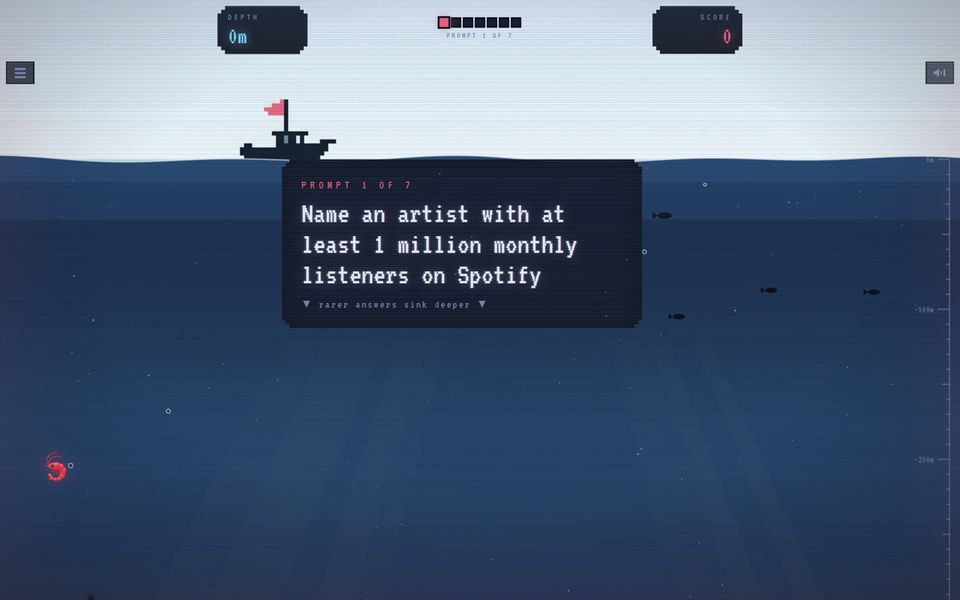
The prospector's trick: type a promising letter pair — “pr” on the P-fruit prompt — and watch the suggestion menu. Every completion the box offers is a confirmed pool member, and the rarer-looking ones (a cultivar, a species, a defunct brand) are exactly the layer that pays. Two seconds of probing before you commit beats twenty seconds of staring at the prompt — see the screenshot at the top of this guide.
When not to chase 100
Arithmetic keeps you honest: a rejected gamble pays 0, a Too Clever crowd-pleaser pays 15, and a safe Schooler pays 30. Across seven prompts, the high floor beats the occasional spike — the scoring guide shows the exact math, and the calculator makes it tactile. Chase the krillion on one or two narrow pools a day; bank the rest. The trench floor is reached by divers who rarely miss, not by divers who never play it safe.
Questions people ask
How do I score 100 points in Krillion?
Type an answer that is inside the official pool but that almost nobody else types. In practice: go one layer more specific than the obvious answer while staying unquestionably real — a named cultivar, a defunct brand, a technical term — instead of reaching for jokes or inventions.
What counts as One in a Krillion?
It's the top rarity tier: your answer was accepted (it's in the official pool) and so few players typed it that round that it pays the full 100 points. It is not a judgment of quality — an accepted answer nobody shares is the whole qualification.
Is chasing 100-point answers risky?
Yes — that's the trade. Specific answers sit closer to the edge of the official pool, and an answer outside the pool scores zero. The safe pattern: chase 100 only on narrow pools where the valid space is small, and bank solid answers everywhere else.
What is the difference between Deep Cut and One in a Krillion?
Both are rare tiers, but they differ in degree: Deep Cut (85 points) means few people typed your answer; One in a Krillion (100) means almost nobody did. In practice Deep Cut is what specific knowledge earns, and 100 is what specific knowledge plus a narrow pool earns.
Part of the Hints4Today logbook — every guide in one place.
Hints4Today is an independent fan site and is not affiliated with the creators of Krillion. Screenshots of the official game are copyright krillion.io and appear here solely for identification and commentary (fair use). Play the official game at krillion.io.
🐋 Done diving? Whallion — our bonus game where the rarer answer feeds the whale. Hand still warm? Put it to work.